Yearly Archives: 2011

369 posts

Linux OS Celebrates 20th Anniversary

To celebrate the 20th anniversary of the Linux Operating System, the Linux Foundation has produced an infographic and video showing the impact the open source operating system has had on the world.

Since its inception in 1991, Linux has grown to become a force in computing, powering everything from the New York Stock Exchange to mobile phones to supercomputers to consumer devices. The Linux Foundation is the nonprofit consortium dedicated to fostering the growth of Linux. Founded in 2007, the Linux Foundation sponsors the work of Linux creator Linus Torvalds and is supported by leading technology companies and developers from around the world.

www.linuxfoundation.org

Free Linux Disk Encryption Tools

Linuxlinks has published “5 of the Best Free Linux Disk Encryption Tools” reviewing Linux encryption tools. For each application they have compiled its own portal page, a full description with an in-depth analysis of its features, screenshots, together with links to relevant resources and reviews.

Disk Encryption Tools:

loop-AES Encrypt disk partitions, removable media, swap space and other devices

dm-crypt Transparent disk encryption subsystem

cryptsetup Configures encrypted block devices

SD4L Hides complete file systems within encrypted regular files

TrueCrypt Used for on-the-fly encryption

Read more: http://www.linuxlinks.com/article/2011040308270275/DiskEncryption.html

Journalists Are Aggregators

Journalists Are Aggregators Too (And That’s A Good Thing) reports Techdirt.

“A bunch of folks have passed along this blog post from the Zunguzungu blog, which notes that journalists are aggregating too. I don’t like the use of the word “thieves” here, as I believe (yet again) that it’s a misleading and wrong use of the term, but I believe the usage here is in comparing the claims of some journalists that aggregators are “thieves.”

The real problem, however, is that journalists are, by their nature, thieves of words. You can call it what you like; you can say “Possibly I am old-fashioned,” and talk about how “actual journalists are laboring at actual history, covering the fever of democracy in Arab capitals and the fever of austerity in American capitals” (Keller) or you can brag about the “148 full-time editors, writers, and reporters engaged in the serious, old-fashioned work of traditional journalism” (Huffington), but all this “old fashioned” stuff is just a way of covering over something really basic about what “actual” journalists “traditionally” do, all the time: write down what other people say. They can exercise editorial discretion in how they integrate and harmonize the various quotes they’ve aggregated. They can confirm, they can contextualize, and they can (very rarely) manage to witness something with their own two eyes. They can produce collages out of stolen scraps. And they should do these things. But at the core of the journalistic process is the act, inescapably, of taking other people’s texts, weaving them together, and then placing them under your byline (with appropriate citation) and profiting from the activity.”

Read more: http://www.techdirt.com/articles/20110408/14381713831/journalists-are-aggregators-too-thats-good-thing.shtml

Facebook Announce Open Compute Project

Facebook have announced the Open Compute Project, an initiative to share the custom-engineered technology in its first dedicated data center in Prineville, Oregon. This advanced technology delivered a 38 percent increase in energy efficiency at 24 percent lower cost for Facebook, and the specifications and best practices behind those gains will now be available to companies across the industry.

“Facebook and our development partners have invested tens of millions of dollars over the past two years to build upon industry specifications to create the most efficient computing infrastructure possible” said Jonathan Heiliger, vice president of technical operations at Facebook. “These advancements are good for Facebook, but we think they could benefit all companies. Today we’re launching the Open Compute Project, a user-led forum, to share our designs and collaborate with anyone interested in highly efficient server and data center designs. We think it’s time to demystify the biggest capital expense of an online business — the infrastructure”

Inspired by the success of open source software, Facebook is publishing technical specifications and mechanical CAD files for the Prineville data center’s servers, power supplies, server racks, battery backup systems and building design. This technology enabled the data center to achieve an initial power usage effectiveness (PUE) ratio of 1.07, compared with 1.5 for our existing facilities, which fall into the “best practice” category as defined by the U.S. Environmental Protection Agency*. Established by the Green Grid in 2007, PUE is an indicator of data center energy efficiency, and the lower the number, the better.

Facebook is releasing these designs as open hardware, aiming to encourage industry-wide collaboration around best practices for data center and server technology.

Advanced Micro Devices, Dell, HP and Intel are among the companies that co-developed technology with Facebook. In addition, Dell’s Data Center Solutions business will design and build servers based on the Open Compute Project specification. Synnex Corporation will also serve as a vendor for Open Compute Project servers, offering fully integrated and tested solutions based on customers’ specifications.

More information about the project, specifications and CAD files are available at http://opencompute.org/ Facebook Engineering page at http://www.facebook.com/Engineering

Glide Instantly Post Any Files Stored on Your Free Glide 30GB GDrive to Twitter and Facebook

Glide has launched new “social file posting” to Facebook and Twitter. Now post any files stored on your Glide GDrive including; photos, photo albums, music, music playlists, video, video playlists, documents, bookmarks, web content and more to your Facebook and Twitter accounts. Glide gives you 30GBs of free online storage to upload and sync files from all of your devices including desktops, laptops, tablets and smartphones as well as tools to capture and manage web content.
Glide’s new social posting tools do the work for you. Upload your files once and Glide’s automated compatibility engine formats your files for easy posting to Twitter and Facebook. Glide also automatically captures and converts web content into personal files that can also be posted. Glide’s automated device recognition makes sure that people who view your posts receive files they can access on different devices and networks.
The Glide Cloud operating system includes a full suite of productivity applications and web capture and conversion tools making it possible to create and edit content online including documents, presentations, photos, drawings and websites. This content can be shared securely and privately through Glide’s rights based collaboration tools as well as posted to Facebook, Twitter and Glide’s own social/private networking application Engage.
“Glide’s new social posting tool adds a powerful file synchronization, media management, collaboration and productivity backend to Twitter and Facebook enabling you to create, consolidate and manage files from all of your devices in the cloud and seamlessly share through your favorite social networks,” said Donald, Leka, Chairman and CEO of TransMedia. “By leveraging the Glide Cloud operating system Facebook and Twitter users now have a host of new features to significantly enhance these services for social and business use.”
Glide provides cross platform compatibility for Windows, Mac OS X, Linux, Android, Android Honeycomb, BlackBerry OS, BlackBerry Tablet OS (QNX), iOS, webOS, Symbian and Windows Mobile users based on automated device identification and file transcoding.

Glide: http://www.GlideLife.com
Glide Mobile: http://www.GlideMobile.com

Mozilla Lists Slow Performing Firefox add-ons

Mozilla the organisation behind has listed slow performing Firefox add-ons.

Mozilla said, “One of Firefox’s great advantages is its extreme extensibility. Extensions can do almost anything. There is a down side to this: poorly written extensions can have a severe impact on the browsing experience, including on the overall performance of Firefox itself. This article offers some best practices and suggestions that can not only improve the performance of your extension, but also of Firefox itself.”

Read More: https://addons.mozilla.org/en-US/firefox/performance/#addon-11

Google Adds New Dynamic Templates to Blogger

Google has added 5 new templates to Blogger using the latest in web technology, including AJAX, HTML5 and CSS3.

Features include:
Infinite scrolling: read more posts without having to reload or click to a second page

New layouts: different views suited to different types of blogs

Speed: download images as you view them, not all at once in advance

Interactivity: there are now more ways to experience and engage with blog content

More info: http://googleblog.blogspot.com/2011/03/fresh-new-perspectives-for-your-blog.html

ASUS Announces Eee Pad Transformer Tablet

ASUS has announced the launch* of the Eee Pad Transformer, the best tablet choice for users looking for media consumption and mobile productivity in an elegant yet versatile design. The ASUS Eee Pad Transformer features the powerful and responsive Android 3.0 operating system, an optional expandable keyboard docking station, and ASUS’ intuitive Waveshare user interface that results in an exciting portable tablet for content creation, social communication, high-definition media playback and smooth realistic game play.
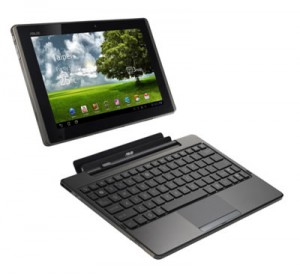
Powered by the NVIDIA® Tegra™ 2 dual-core processor, the Transformer browses the web at blazing speeds, providing snappier response times and excellent multi-tasking performance. An IPS (in-plane switching) Panel made from durable and scratch-resistant Corning® Gorilla® Glass is viewable at angles up to 178°, perfect for sharing your favorite photos, web pages, work documents and more with co-workers, friends or family next you or across the room. The 10.1” IPS panel features LED backlighting that provides brilliant and vivid colors at a 1280×800 resolution, perfect for viewing high-definition movies and other media content.

Built-in SRS Sound technology provides a dynamic 3D stereo audio experience, with maximum bass response and a wide sound field from the discrete speakers housed in a thin 0.51” thick chassis that only weighs 1.49lbs. A 1.2MP front-facing camera is perfect for video conferencing while the rear-facing 5MP camera can shoot and record HD video, which can be played back on HDTVs via the mini HDMI output port, making the Eee Pad Transformer a true mobile entertainment device.

Transform from pad to notebook mode with optional keyboard docking station
The Transformer sets itself apart from other tablets on the market by featuring an optional docking station. This unique docking station provides access to a full QWERTY keyboard along with unique Android Function keys, instantly turning the Transformer into a mobile content creation device.

A touchpad, 3.5mm audio jack, two USB ports as well as a built-in SD Card reader for easy file sharing and storage expandability makes the Transformer a versatile media hub. The docking station also extends the Transformer’s 9.5 hours** of battery life up to 16 hours**, so users can use it all day for work or play. In addition, the ultra-convenient ASUS WebStorage* with one year of unlimited storage space provides worry-free cloud computing.

Android 3.0 OS melds with ASUS’ Waveshare UI for a unique user experience
Google’s Android 3.0 (Honeycomb) is a revolutionary operating system specially designed and optimized for tablets, which enables users a rich web experience for on-the-go web browsing, social media activities, video playback and casual gaming. Supporting Adobe® Flash® 10.2*** and the ever growing Android Market, media entertainment is just a finger swipe away. The convenient ASUS Launcher also allows users to easily launch software, manage content and access online services and connect devices with a few simple taps, while ASUS’ Waveshare Interface hosts a variety of unique applications* such as MyNet, MyLibrary, MyCloud and more.

MyNet easily streams digital media wirelessly within home network devices so HD videos or music can be played on devices such as an HDTV or desktop PCs for an even better experience from the Transformer. MyLibrary consolidates downloaded books, magazines and newspapers in to one easy to browse profile while MyCloud is a total cloud solution, providing access to digital content such as music, videos and files from the cloud anywhere, anytime. Users can even use MyCloud to remotely access and control any PC or Mac system and access applications or files to extend the versatility of the Eee Pad Transformer experience.

Google App Engine Gets Search Feature

Google has announced that it’s cloud platform App Engine has a new search feature that can be used to build notification, monitoring, or filtering services.

Google App Engine allows developers to build and host cloud-based applications on the same systems that power Google’s own applications. To build applications, developers use the App Engine SDK for either Python or Java. The release also introduces a new Blobstore writing feature, the experimental release of the Prospective Search API in Python, and a few goodies for Task Queue and Cron users.

You can serve your app from your own domain name (such as http://www.example.com/) using Google Apps. Or, you can serve your app using a free name on the appspot.com domain. You can share your application with the world, or limit access to members of your organization.

Read more: http://googleappengine.blogspot.com/2011/03/announcing-app-engine-143-release_30.html

Download: http://code.google.com/appengine/downloads.html#Download_the_Google_App_Engine_SDK

Google Launches +1 Search Recommendations

Google have recently started to include more information from people you know—stuff they’ve shared on Twitter, Flickr and other sites—in Google search results.

Google have announced taking that a step further, enabling you to share recommendations with the world right in Google’s search results. It’s called +1—the digital shorthand for “this is pretty cool.” To recommend something, all you have to do is click +1 on a webpage or ad you find useful. These +1’s will then start appearing in Google’s search results.

Google said they will be slowly rolling out +1’s, starting in English on Google.com. If you can’t wait to start seeing +1’s, we’ll soon let you opt-in to the launch by visiting our experimental search site. Initially, +1’s will appear alongside search results and ads, but in the weeks ahead they’ll appear in many more places (including other Google products and sites across the web).

More: http://googleblog.blogspot.com/2011/03/1s-right-recommendations-right-when-you.html

Gmail Ads That Learn From Your Inbox

Google has announced Gmail ads that learn from your inbox. Users will be able to opt out of the new signals system on the Gmail settings page.

“Soon we’re going to try a similar approach to ads: using some of the same signals that help predict which messages are likely to be important to you, Gmail will better predict which ads may be useful to you. For example, if you’ve recently received a lot of messages about photography or cameras, a deal from a local camera store might be interesting. On the other hand if you’ve reported these messages as spam, you probably don’t want to see that deal.

Only a few users will notice the change to begin with, but as we improve it we’ll roll it out more widely. As always, ads in Gmail are fully automated-no humans read your messages- and no messages or personally identifiable information about you is shared with advertisers.”

More info: http://mail.google.com/support/bin/answer.py?hl=en&ctx=mail&answer=1217362

MySql Hacked With Sql Injection

MySQL.com database has been compromised by a blind SQL injection, reports techie-buzz.

The vulnerability for the attack, completed using blind SQL injection and targeted servers including MySQL.com, MySQL.fr, MySQL.de and MySQL.it, was initially found by “TinKode” and “Ne0h” of Slacker.Ro (according to their pastebin.com/BayvYdcP dump of the stolen credentials) but published by “Jackh4x0r”.

The stolen database contain both member and employee email addresses and credentials, as well as tables with customer and partner information and internal network details. Hashes from the database have been posted, with some having been already cracked.

Read more: http://techie-buzz.com/tech-news/mysql-com-database-compromised-sql-injection.html